

Hurricane season officially runs from June 1 through November 30, but residents in Buffalo should think less about a direct hurricane strike and more about the effects of tropical systems after they move inland. Remnants can still bring strong wind, heavy rain, saturated ground, and falling branches—conditions that can expose weaknesses in a roof. ([nhc.noaa.gov](https://www.nhc.noaa.gov/climo/?utm_source=openai))
Why should Buffalo households prepare for hurricane season?
Buffalo is far inland, but tropical storms can travel well beyond the coast. By the time a storm reaches the region, it may no longer be classified as a hurricane, yet its wind and rainfall can still create roof problems.
The greatest risks usually involve:
- Missing or loosened shingles
- Wind-driven rain entering around flashing, vents, or chimneys
- Clogged gutters and overflowing drainage systems
- Fallen limbs striking the roof
- Water pooling near low-slope sections
- Existing leaks becoming worse during prolonged rainfall
A roof does not need to experience hurricane-force wind to sustain damage. Older roofing materials, improperly fastened shingles, exposed flashing, and neglected drainage areas may fail during a much more ordinary severe thunderstorm.
What should be inspected before storm season?
A pre-season inspection should focus on visible conditions that can allow wind or water to enter. From the ground, look for shingles that are cracked, curled, lifted, missing, or noticeably darker than surrounding areas.
Also check whether:
- Shingle edges appear loose
- Granules are collecting heavily in gutters
- Metal flashing is bent, separated, or missing
- The chimney cap or masonry shows cracks
- Roof vents appear tilted or damaged
- Skylight edges show gaps or deteriorated seals
- Sections of the roof sag between supports
Do not climb onto a wet, steep, or damaged roof. A pair of binoculars can help identify obvious concerns without creating a fall hazard. Roof damage may also be visible from the attic, especially as dark stains, damp insulation, daylight around penetrations, or fresh water marks on rafters.
How can gutters and downspouts reduce storm-related roof damage?
Gutters and downspouts should be clear enough to move rainwater away from the roof and foundation. Leaves, twigs, and windblown debris can block the system, causing water to back up under roof edges or spill against siding and basement walls.
Before a forecasted storm:
- Remove accumulated leaves and sediment.
- Confirm that downspouts discharge away from the foundation.
- Check for separated joints or sagging sections.
- Make sure downspout extensions have not been crushed or displaced.
- Look for water stains beneath the roof edge.
In older homes and closely spaced neighborhoods, a small drainage problem can affect more than one area of the property. Water that cannot leave the roof efficiently may enter at fascia boards, soffits, wall intersections, or other vulnerable edges.
Which roof details are most vulnerable to wind-driven rain?
Roof penetrations and transition points often deserve more attention than the middle of a shingle field. Wind-driven rain can move upward or sideways beneath loose materials, particularly around chimneys, plumbing vents, skylights, dormers, and roof-to-wall intersections.
Flashing should lie flat and appear securely attached. Sealant alone is not a permanent substitute for properly installed metal flashing. If flashing is visibly loose, corroded through, or separated from masonry or roofing materials, it may allow water to enter even when the shingles appear intact.
Ventilation components should also be checked for damage. A cracked plastic vent, loose metal cover, or missing protective cap can become an opening for rain and debris.
What outdoor items should be secured before a storm?
Roof damage often begins with objects that are not part of the roof. Patio furniture, ladders, tools, children’s equipment, planters, and unsecured construction materials can become airborne in strong wind and strike shingles, vents, siding, or windows.
Before severe weather is expected:
- Bring lightweight items indoors.
- Tie down or store larger objects that cannot be moved.
- Close and secure shed doors.
- Trim only loose branches that can be safely reached from the ground.
- Keep ladders and tools away from areas where wind could move them.
- Check that satellite dishes, antennas, and other rooftop equipment are stable.
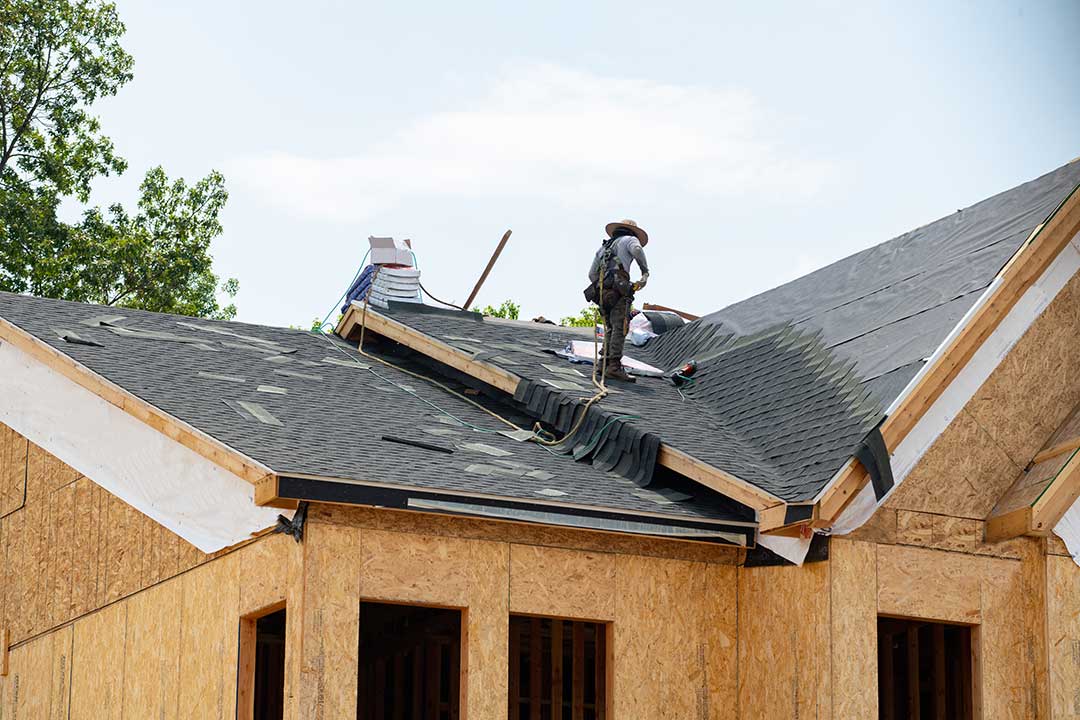
Do not attempt to remove a large tree limb near utility lines or climb onto the roof to secure equipment while strong winds are approaching.
Should roof repairs be completed before a storm warning?
Yes, visible defects should be addressed before the weather becomes dangerous, but emergency roof work should not be attempted during high wind, lightning, or heavy rain. Preparation is most effective when completed well before a storm warning.
Temporary measures such as a properly secured tarp may limit water entry after damage, but tarps can be hazardous to install and may fail if attached incorrectly. They should not be treated as a substitute for a lasting repair.
If a roof has an active leak, exposed decking, a large missing section of shingles, or structural sagging, the priority is keeping people away from the affected area and protecting interior belongings without putting anyone on the roof.
How should homeowners prepare the attic and interior?
A roof can remain intact while water enters through a small opening. Inspect the attic before storm season so new moisture is easier to identify.
Look for:
- Damp insulation
- Mold-like odors
- Rust around fasteners
- Water stains on roof decking
- Daylight visible through the roof
- Wetness near chimneys, vents, or valleys
Store important papers, electronics, and valuables away from areas with a history of leakage. If a storm is approaching, place containers beneath known interior drips only if doing so is safe, and avoid touching wet electrical fixtures or wiring.
What should be documented after storm damage?
After the weather passes, inspect the property from the ground first. Photograph missing shingles, fallen branches, damaged flashing, gutter separation, interior staining, and wet materials. Note the date and approximate time the damage was discovered.
Do not assume that every stain represents new damage; older roof leaks may become visible again after heavy rain. Comparing current photographs with pre-season photos can help distinguish recent changes.
If a tree has struck the roof, if the ceiling is sagging, or if water is near electrical systems, leave the affected area and seek appropriate emergency assistance. Roof surfaces may be slippery, weakened, or hidden beneath debris even when damage is not obvious.
Is a roof ready if it has never leaked?
Not necessarily. A roof can have concealed weaknesses that only appear under wind pressure or sustained rainfall. Good preparation means checking the condition of shingles, flashing, drainage, attic spaces, and nearby trees before the first major storm—not waiting for water to appear indoors.
For Buffalo households, hurricane-season readiness is therefore part of broader severe-weather preparation. The same steps also help before summer thunderstorms, remnants of tropical systems, and autumn wind events that can affect roofs long after the official Atlantic season ends. ([nhc.noaa.gov](https://www.nhc.noaa.gov/climo/?utm_source=openai))
