
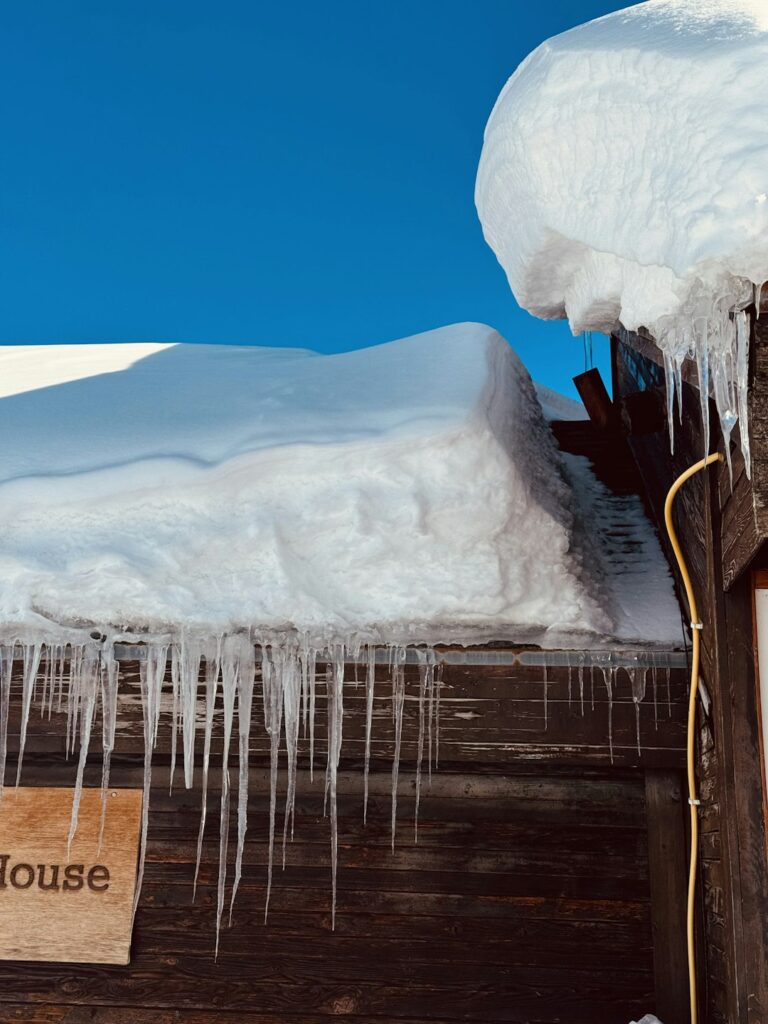
Ice dams are ridges of frozen water that form along a roof’s lower edge after heat escapes from the living space, melts snow higher on the roof, and sends water toward a colder eave. The water refreezes before it can drain away, creating a dam that may force moisture beneath shingles and into the attic or walls.
For households in Buffalo, NY, the combination of heavy snowfall, below-freezing nights, winter thaws, and lake-effect weather can create repeated opportunities for this cycle. Understanding how ice dams form is the first step toward preventing them.
What causes an ice dam?
An ice dam forms when different sections of the same roof are at noticeably different temperatures.
Snow rests on the roof while the upper roof surface becomes warm enough to melt the snow underneath. That heat commonly comes from:
- Insufficient attic insulation
- Air leaks around light fixtures, plumbing penetrations, attic hatches, and chimneys
- Warm air escaping through poorly sealed ceiling areas
- Heating ducts or equipment located in the attic
- Bathroom fans, kitchen exhaust, or dryers that discharge warm, moist air into the attic instead of outdoors
The melted water runs downward beneath the snow. When it reaches the colder roof edge, usually near the soffit and gutter, it freezes. More snowmelt then collects behind the frozen ridge, gradually increasing the size of the dam.
Ice dams are not caused simply by having snow on the roof. They are usually a sign that heat and air movement inside the home are affecting the roof surface unevenly.
Why are ice dams a concern?
The visible ice at the eave is only part of the problem. Standing water behind the dam can work beneath shingles, underlayment, flashing, and other roof materials.
Possible signs of related damage include:
- Brown or yellow ceiling stains near exterior walls
- Damp insulation in the attic
- Peeling paint or bubbling drywall
- Moisture around window and door trim
- Musty odors
- Mold growth on roof framing or insulation
- Sagging gutters or damaged fascia
- Icicles that become unusually large or numerous
Repeated wetting can also reduce the effectiveness of insulation. Wet insulation does not perform as well, and the resulting heat loss can contribute to additional melting.
Large icicles create a separate hazard. They can fall without warning, especially during a thaw or when sunlight warms the roof edge. Ice and snow may also slide from a roof onto walkways, vehicles, or lower roof sections.
Why is this a recurring issue in Buffalo?
Winter conditions in Buffalo are changeable. Lake-effect snow can produce substantial accumulation in a short period, while temperature swings may bring rain, partial melting, and refreezing soon afterward. A roof may experience several freeze-thaw cycles during the same season.
Older housing can be more vulnerable when attic insulation has settled, air sealing is incomplete, or additions and remodeled areas were insulated differently from the original structure. Roof sections over porches, enclosed additions, attached garages, and lower-slope extensions may also remain colder than the main roof, making them common locations for ice buildup.
Not every home experiences ice dams, and snowfall alone does not predict the problem. Roof design, insulation, air leakage, ventilation, shade, orientation, and indoor humidity all matter.
How can homeowners prevent ice dams?
The most reliable prevention strategy is to keep the roof deck close to the outdoor temperature while controlling indoor moisture and air leakage.
Seal air leaks at the attic floor
Warm indoor air should not pass freely into the attic. Common leakage points include:
- Attic access panels and pull-down stairs
- Recessed lights not rated for insulated ceilings
- Plumbing and electrical penetrations
- Chimneys and flues
- Partition walls
- Duct chases
- Wiring holes
- Gaps around bathroom fans
Air sealing should be performed with materials appropriate for the location and nearby heat sources. Some fixtures, chimneys, and flues require specific clearances and noncombustible materials.

Improve attic insulation
Insulation slows heat transfer from the living space into the attic. It should be installed evenly across the attic floor, including areas near the exterior wall top plates where insulation is often thin or missing.
Adding insulation without first addressing air leaks can trap moisture in the insulation or leave warm air pathways open. A properly insulated attic also needs adequate clearance at soffit vents so insulation does not block the movement of outdoor air.
Maintain continuous attic ventilation
A typical vented attic works best when air enters through low roof or soffit vents and exits through high vents. Baffles can help preserve an open channel above the insulation at each soffit vent.
Ventilation is not a substitute for air sealing and insulation. It cannot correct large heat leaks by itself, and adding isolated roof vents without a balanced intake-and-exhaust design may not solve the underlying problem.
Keep indoor moisture under control
Warm, humid indoor air can increase condensation and heat transfer in cold attic areas. Helpful habits include:
- Running bathroom exhaust fans during showers and for a short period afterward
- Using a range hood that vents outdoors when possible
- Covering pots while cooking
- Avoiding indoor drying of large amounts of wet clothing
- Checking that exhaust ducts terminate outdoors
- Keeping attic access covers properly weather-sealed
A bathroom fan that ends in the attic can add both heat and moisture exactly where they create the greatest risk.
Should snow be removed from the roof?
Removing snow may reduce the amount of meltwater available to form an ice dam, but roof work in winter can be dangerous. Climbing onto a snow-covered roof creates fall risks, and using a shovel, rake, or other tool incorrectly can damage shingles, flashing, gutters, or roof edges.
If snow removal is necessary, it should be done from a safe position and with equipment designed for the task. Do not chip at an ice dam with an axe, hammer, or sharp tool. Breaking the ice can damage roofing materials and create falling debris.
Roof rakes used from the ground may be suitable for some roof designs, but they are not appropriate for every situation, especially where overhead wires, steep slopes, fragile coverings, or nearby people are present.
What should be done if an ice dam is already present?
First, keep people and pets away from areas below large icicles or overhanging snow. Move vehicles and outdoor items if falling ice is a possibility.
Inside the home, check the attic and upper-floor ceilings for active leaks, wet insulation, or staining. Place containers under drips and move valuables away from affected areas. Do not puncture the ceiling unless there is a serious amount of trapped water and the location of the ceiling framing and electrical wiring is known.
Temporary measures may include improving attic ventilation, reducing indoor humidity, and carefully removing accessible snow from the roof. However, an existing ice dam can conceal roof damage, and electrical components or wet insulation may create additional hazards. Situations involving steep roofs, active leaks, significant ice buildup, structural concerns, or unsafe access require qualified assistance for safety reasons.
Do metal roof edges, gutters, or heating cables prevent ice dams?
Gutters do not cause ice dams, but they can provide a place for frozen water to collect. Keeping gutters and downspouts clear helps normal drainage but does not correct heat loss through the attic.
Roof-edge membranes installed beneath the shingles may provide added protection against water intrusion in vulnerable areas, but they do not stop snow from melting or eliminate the cause of an ice dam.
Heating cables can keep narrow drainage paths open in some roof-edge areas. They use electricity, require proper installation, and may need maintenance during the winter. They should be treated as a supplemental measure rather than a replacement for air sealing, insulation, and balanced ventilation.
The most durable solution is usually found inside the building envelope: reduce heat escaping into the attic, keep insulation continuous, control indoor moisture, and maintain a clear ventilation path. Those steps address the conditions that allow ice dams to form in the first place.
